
Arrest Warrants in Frontier County
An arrest warrant is court process that lets an officer bring an accused person before the issuing court. The authority comes from the judge. Nebraska section 29-403 governs the judicial power to issue process to apprehend. Section 29-406 spells out the rest: the direction to the sheriff or city or village law enforcement, the substance of the accusation, and the command to bring the accused in. The court creates the warrant and keeps the docket. The sheriff or another authorized officer executes it. Frontier County publishes no online arrest-warrant roster. Run JUSTICE as a public case check, then call the court and the sheriff directly.
How Nebraska Judges Issue Frontier Arrest Process
A criminal complaint and a probable-cause finding are what usually put an arrest warrant in motion. Misdemeanor complaints can be filed by a county attorney, a city attorney, or a special prosecutor. Those roles start a case, but none of them is the office that confirms a current warrant. In Frontier County, the County Attorney's Office prosecutes county and state criminal matters and conducts criminal examinations before the court. The judge, clerk, and sheriff each hold a different piece. When you call, ask the issuing clerk for the case number, the process type, the bond, the next date, and the recall status. Nebraska's official procedure pages walk through the county-court preliminary hearing for a felony and the bind-over that follows a probable-cause finding.
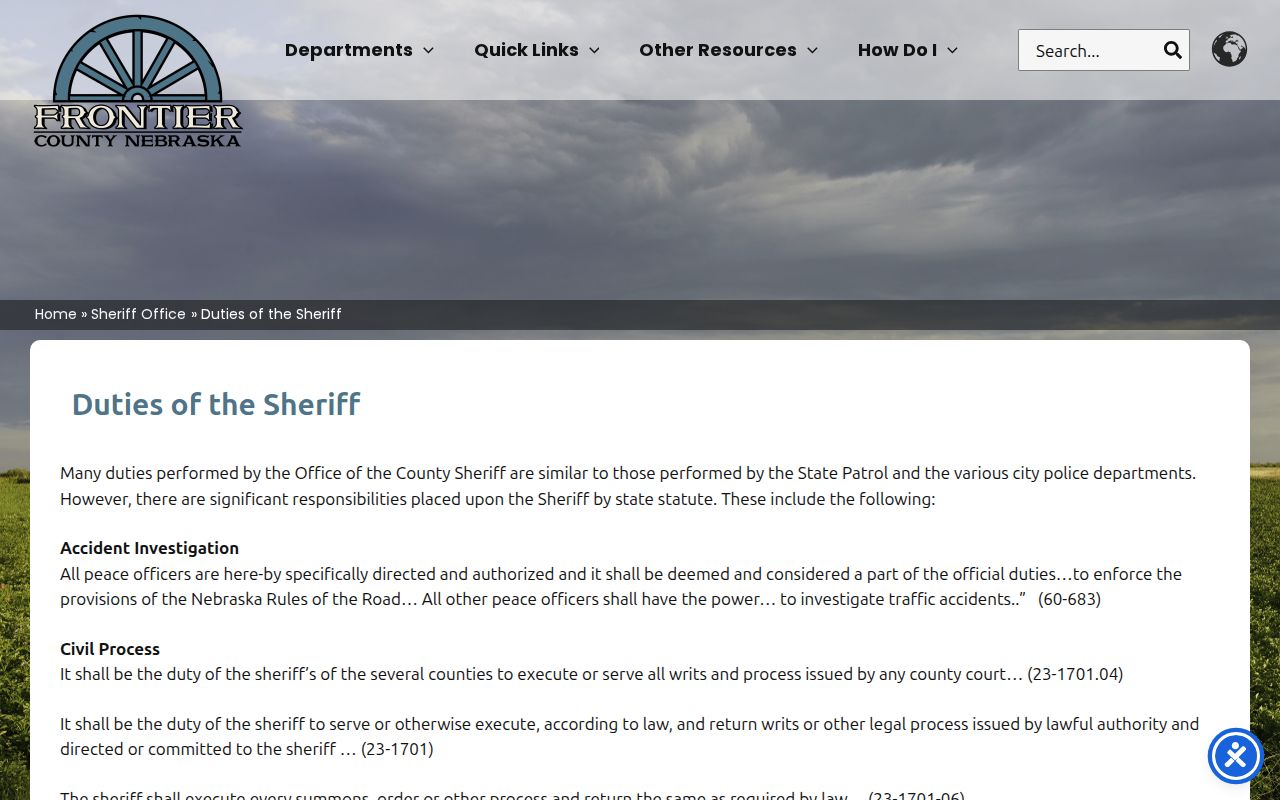
The county-posted duties image supports the distinction between judicial issuance and sheriff execution.
What a Frontier County Arrest Warrant Contains
Frontier County posts no completed public arrest-warrant sample. The fields described here come from section 29-406, JUSTICE, and Nebraska forms. A public file may not show every item, and access can depend on execution or investigation status.
| Issuing court | Frontier County Court or District Court, depending on the case stage. |
|---|---|
| Case number | The file identifier used by the clerk and JUSTICE. |
| Accusation or offense | The substance of the complaint or citation that supports the process. |
| Issue event | The date or docket entry showing judicial action. |
| Bond or release | A court-set condition such as PR, cash, deposit, or surety. |
| Service or recall | An officer return or later court action, when public and available. |
Use the case number to ask a focused question. A charge label or balance alone will not tell you the current status of a Frontier County warrant.
Complaint, Probable Cause, and Bind-Over
Felony cases in Frontier County often begin in County Court with a complaint and a preliminary hearing. If probable cause is found, the case can bind over to District Court. So a search of just one court level can miss the current stage. Start broad with a JUSTICE name search, then compare the Court Type and Case Type/Subtype fields. An arrest warrant tied to initial criminal process is not the same as a bench warrant entered after a missed setting. A single docket can hold both at different times. Ask the clerk what the newest event means. Also ask whether another court now controls the file.
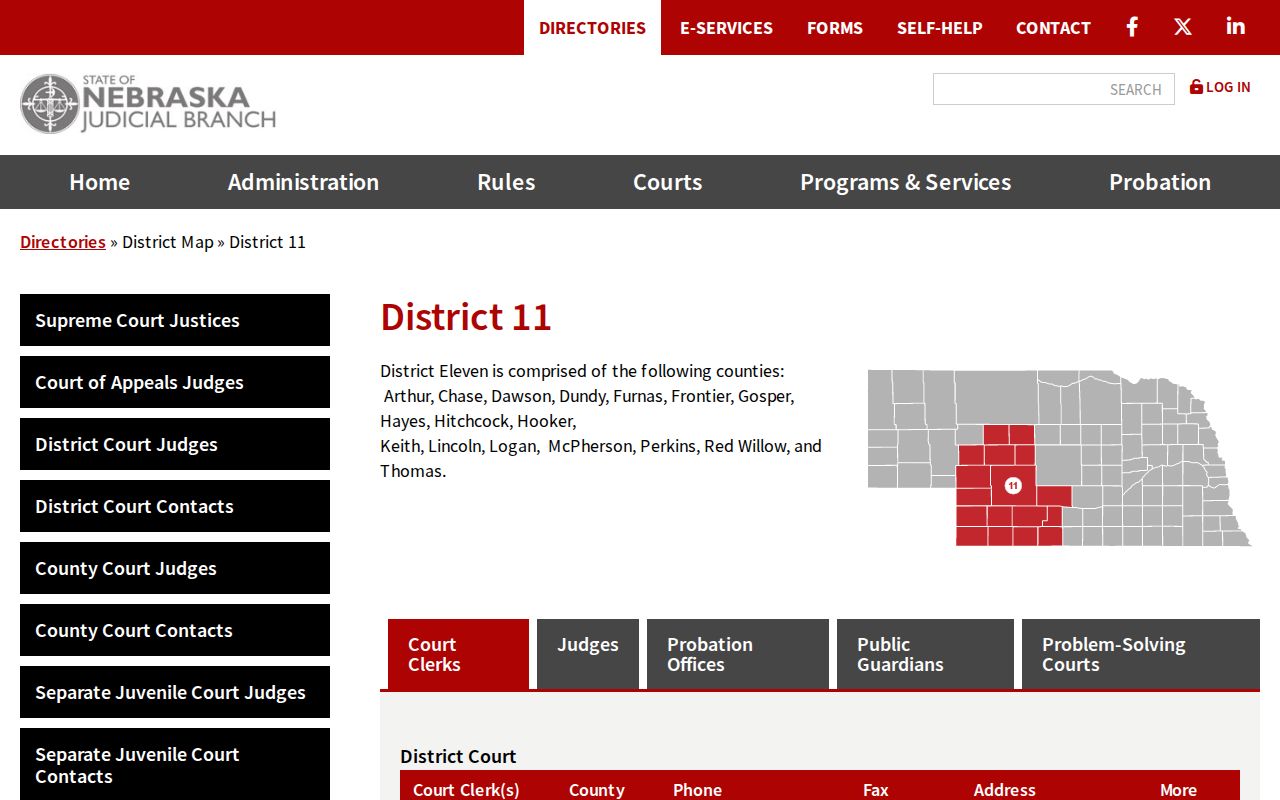
District 11 explains Frontier County's path between the two courts.
Serving Arrest Warrants in Frontier County
Section 29-406 directs process to authorized law enforcement. The Frontier County Sheriff's Office handles patrol, arrest, legal-process service, the jail, communications, investigation, and court attendance. The office can execute a warrant or hold a related record, but it does not replace the issuing court's docket. Curtis, Maywood, and Eustis rely on the sheriff for contracted police services. None of those towns runs its own arrest-warrant portal. For execution-side questions, call the sheriff at 308-367-4411. For case, bond, next-date, or recall questions, call the court at 308-367-8629.
Arrest Warrant Versus Summons and Bench Warrant
A summons asks a person to appear. An arrest warrant lets an officer take the person before the court. A bench warrant usually follows a missed appearance, payment, or order. Each document raises different questions for a Frontier County defendant about service, bond, and recall.
| Process | Usual purpose | First status question |
|---|---|---|
| Summons | Give notice of a required court appearance. | What date and response does the court require? |
| Arrest warrant | Authorize apprehension under court process. | Which court issued it, and is bond set? |
| Bench warrant | Respond to a missed or unmet court obligation. | What recall, appearance, or payment step is required? |
A search warrant is none of these person-focused processes. It concerns property or evidence in Frontier County and follows separate access rules.
Warrantless Arrest Affidavit or Arrest Warrant?
The Nebraska Judicial Branch publishes a Warrantless Arrest Affidavit page and a county-court criminal form. A warrantless arrest is a different legal route from a court-issued arrest warrant. Do not assume an arrest affidavit is a warrant. Do not assume every arrest requires a public warrant record. A later Frontier County case can still contain bond, complaint, appearance, or bench-warrant events. Ask the court what process appears in the register; the official warrantless arrest resource lays out the distinction.
Ask for the Frontier County Case Number
When you call the clerk, ask which court issued the process. Get the case number. Ask for the offense or citation description, the issue date, any bond or release condition, and the next appearance. Also ask whether a recall or service entry appears. Check with the sheriff on local execution or booking instructions, and ask counsel about rights and filing choices when the matter is criminal, uncertain, or tied to extradition.
Verify the route first: Frontier’s sources do not publish a dedicated surrender window, local arrest-warrant form, or fixed bond counter.
Use only official Frontier County numbers from the court or county pages. Nebraska courts warn about callers demanding immediate payment by gift card, wire, cryptocurrency, or another unusual channel.
Search-Warrant Affidavits Can Be Restricted
A search warrant authorizes a search of property or a place, not an arrest. That distinction matters when you ask Frontier County for records. Before the warrant is executed, Section 29-817 keeps the complaint, affidavit, and supporting testimony confidential. Section 84-712.05 can shield law-enforcement investigatory material as well. Neither seal says anything about an arrest warrant. After execution, access still depends on the record and any exemption that applies. Ask the responsible court or agency for the public portion, accept lawful redactions, and do not read a closed search-warrant file as proof of an active arrest warrant.
Federal courts run their own warrant process entirely, so a federal matter sits outside the Frontier County system.
Handling an Arrest Warrant in Frontier County
Start with the issuing court. Ask whether the warrant is active, what bond or release order applies, and whether a motion, appearance, or surrender is required. Then call the sheriff before you travel. Execution-side details are shared only as the office allows. A payment, a news report, or an old search result does not resolve the case. If the process is federal or from another state, the originating court or agency controls it. PACER, the federal clerk, or the U.S. Marshals Service may come into play, but Frontier County cannot clear federal process. Current case status always belongs to the responsible court.